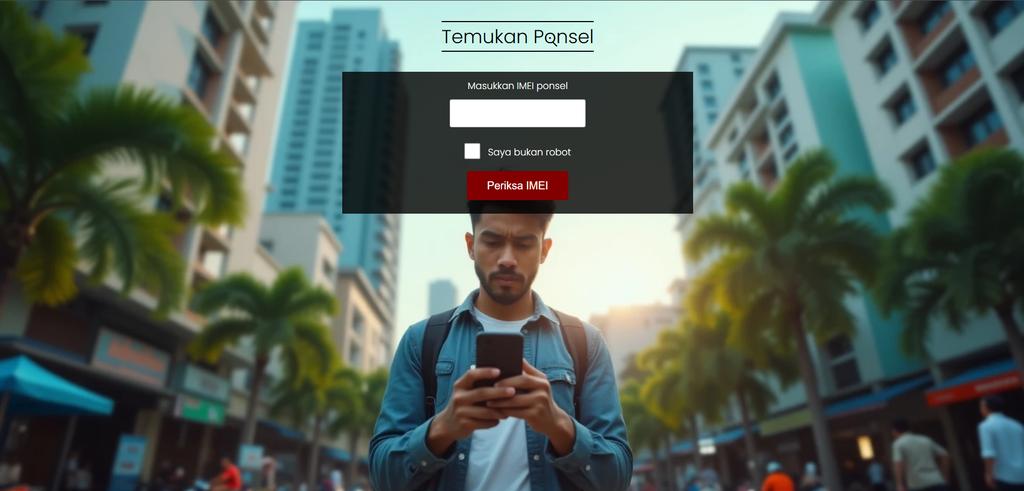
Indonesian Phone IMEI Lookup
Temukan Ponsel: Lost Phone Guidance and IMEI Lookup (Indonesia)
Project overview
Temukan Ponsel is an Indonesia-focused web utility designed for real-world phone recovery scenarios. The project emphasizes clarity and practical next steps when a device is misplaced, lost, or stolen, especially in the first hours when quick action matters most.
The service is built around a simple principle: most users do not need complex tooling—they need a short, reliable sequence of actions they can execute immediately. Temukan Ponsel structures recovery guidance in a straightforward way, helping users understand what information to gather, what to secure first, and which options are realistic depending on the situation.
The content is written for Indonesian audiences and aligns with common user expectations: account-based location tools, security steps (such as protecting access), and the role of official reporting. It avoids “instant tracking” claims and instead focuses on steps that are widely applicable and responsible.
Typical recovery workflow
Temukan Ponsel maps guidance to the decision points people commonly face: Is the phone simply misplaced? Was it lost outside the home? Is there reason to believe it was stolen? Each scenario benefits from different priorities, but most share the same early fundamentals: secure key accounts, reduce the risk of unauthorized access, and document identifiers that may be needed later.
The project encourages a calm, step-by-step approach. Users are reminded to confirm the last known context (time and place), check account-level options (where available), and apply security measures that protect data even if the device is not recovered. This guidance is intentionally practical: it aims to improve outcomes without asking users to become experts.
Lacak IMEI
The core content area is Lacak IMEI (IMEI lookup guidance). It explains what an IMEI is, where it can be found (device packaging, purchase documentation, or device settings when accessible), and why it matters in recovery and verification contexts.
Importantly, the project clarifies how IMEI is typically used: as an identifier that can support reporting and recovery workflows, rather than a “consumer tracking tool” that instantly reveals a live location. This helps set realistic expectations while still giving users a concrete next step—collecting the right identifier and knowing when and how it is relevant.
Related page: temukan-ponsel.com/lacak-imei
Second-hand device checks and risk reduction
Another practical use case supported by the project is pre-purchase caution for second-hand devices. In many markets, users want reassurance that a device is legitimate and not associated with problematic history. Temukan Ponsel’s IMEI-oriented guidance helps users understand what to verify, which inconsistencies are red flags, and when it is safer to walk away from a transaction.
While the project remains lightweight, it supports a “trust-first” mindset: identify the device correctly, compare details consistently, and avoid situations where the seller cannot provide credible documentation. This is particularly valuable for users who rely on marketplaces and private sellers.
Content structure and usability
Temukan Ponsel is designed to be easy to navigate on mobile, because many users land on the site during urgent situations and from a phone that may be shared or temporary. The information is organized into short sections, uses direct language, and avoids unnecessary friction.
The intent is to make the experience feel immediate: users can quickly scan for the step they need, then return for additional context once the urgent action is complete. This approach aligns well with recovery scenarios where attention span and time are limited.
Practical value
Overall, Temukan Ponsel supports users with a lightweight, action-oriented knowledge base: what to do first, what information to keep, how IMEI fits into official workflows, and how to reduce risk in second-hand purchases. The project is intentionally conservative in its claims and aims to provide guidance that is broadly applicable and responsible.
From a product perspective, this is a good example of a localized utility: it targets a clear user intent, keeps the experience minimal, and emphasizes trust and clarity over complexity.
Visit the project
Official website: https://temukan-ponsel.com/
If you are interested in building similar utility-focused platforms—localized, SEO-driven, and user-intent oriented— you can reach out via the contact page.